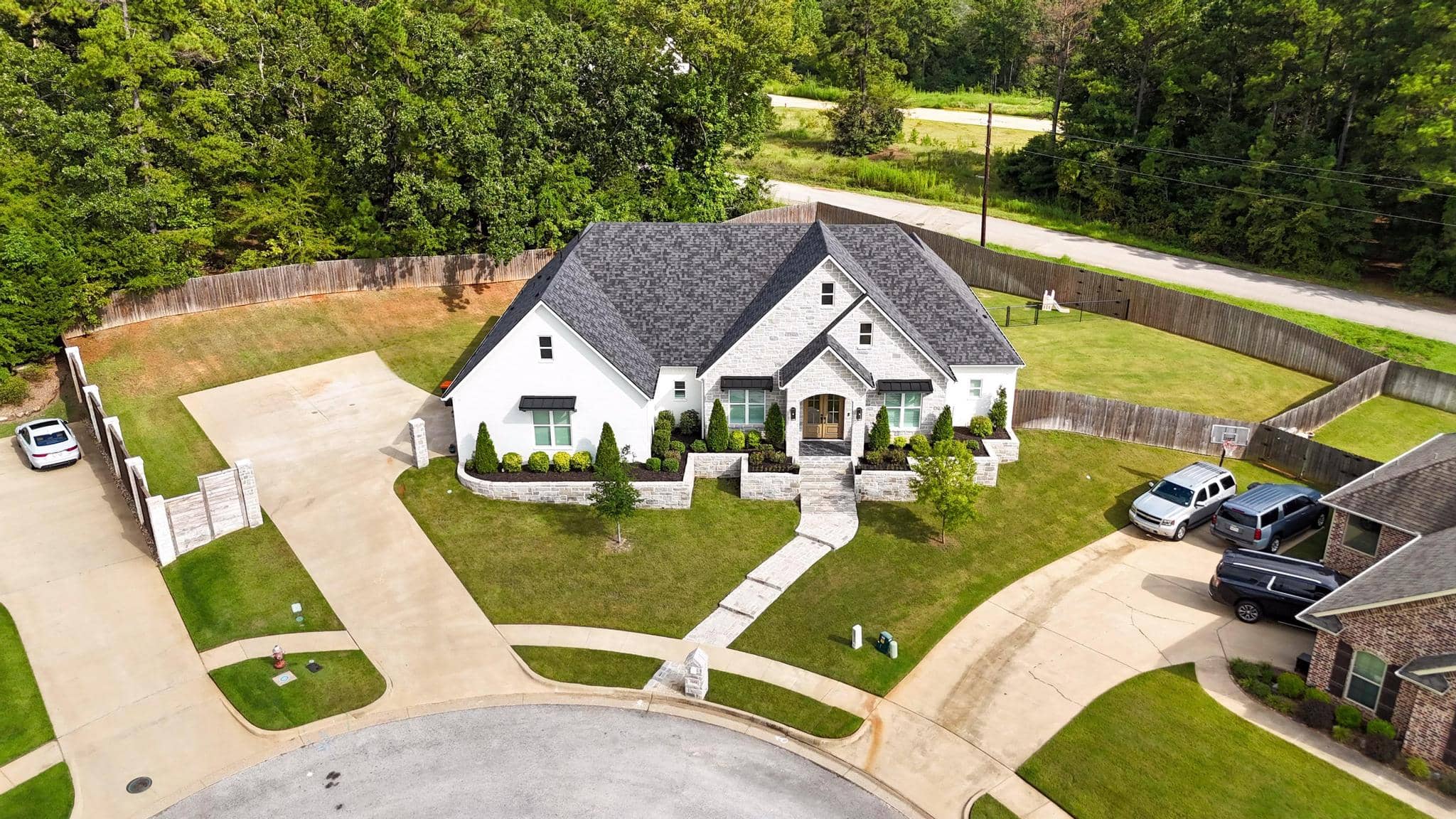
Why New Construction Is Different
A resale home is a single, known quantity — the walls are up, the quirks are visible, and the price is negotiated against what similar homes have sold for nearby. New construction is fundamentally different. You're buying a promise: a home that will be built to plans, delivered on a schedule, and finished to a specification that's partly standard and partly customized to your selections.
That changes almost every piece of the transaction. The contract isn't the standard Texas Real Estate Commission form — it's the builder's own, written by the builder's lawyers to protect the builder. The inspection timeline isn't a single day — it's a series of milestones during construction. The negotiations aren't primarily over a list price — they're over allowances, selections, scope, and the build schedule.
And here's what makes East Texas different from the big metros: out here there's rarely a row of model homes or a national production builder running a sales office. The vast majority of new construction is custom or semi-custom — built one home at a time by a local or regional builder you'll usually deal with directly. That's a better experience in almost every way. But it also means there's no corporate sales process to lean on, and the person across the table still works for the builder, not for you.
The builder's representative works for the builder — not for you.
Whether it's a sales rep or the builder sitting across the kitchen table, they're professional, friendly, and helpful. They'll answer every question. But their loyalty is to the builder. When something needs to be negotiated — a closing date, a credit, a warranty concern — they're protecting the company, not you.
Why You Need Your Own Broker
Bringing your own broker to a new construction purchase is one of the smartest moves a buyer can make, and it almost always costs the buyer nothing. The builder has already budgeted for the buyer's broker commission — it's baked into the home's price whether you show up with representation or not. If you arrive without a broker, the builder keeps that money.
More importantly, you get someone in your corner who:
- Has seen dozens of builder contracts — Linda knows where each builder tends to tuck unfavorable language, where there's room to negotiate, and which provisions are standard vs. negotiable.
- Has relationships with the builders themselves — owner to owner, not just whoever happens to answer the phone. When something goes sideways, the call goes straight to the person actually running the build, not into an email queue.
- Can flag problems during construction — regular site visits catch issues before drywall covers them.
- Walks the final punch list with a trained eye — finding every mismatched outlet, misaligned door, uneven tile, and incorrect finish before closing, when the builder still has obligation to fix them at no cost.
Bring Linda in before your first real conversation with a builder.
In East Texas you'll usually deal with the builder directly — there's no model-home visitor card to sign. But the principle still holds: establish Linda as your broker before you start talking price, lot, or terms. If you negotiate with a builder on your own first, some will later refuse to recognize your broker, and you'll lose your representation for the purchase.
Choosing the Right Builder
Not every builder in East Texas operates the same way. Some are local family businesses with three superintendents and deep roots. Some are regional operators building across several East Texas counties. A few production-style builders work the larger towns, but the vast majority of building out here is custom or semi-custom — one home, one client, at a time. Each builder has its strengths — and its red flags to watch for.
Questions worth asking before you commit to any builder:
- How long has the company been building in this market?
- How many homes have they completed in the last 24 months in East Texas?
- Can they provide references from three buyers who closed in the last year?
- Who handles warranty calls after closing, and how fast do they respond?
- Is construction fully in-house, or subcontracted out? (Neither is wrong — but affects accountability.)
- How do they handle change orders once construction starts?
- What financing partners do they work with, and are you required to use them?
"The best clue to how a builder will treat you is how they've treated their last ten customers. Drive the completed neighborhoods. Knock on doors. Ask."
Linda works with a wide range of East Texas builders — but two of them are family: Chase Homes and Nicholas Humphrey Homes, both based in Tyler. When Linda recommends a family builder, she's staking something more than a commission on the quality of their work.
Understanding the Builder's Contract
The builder's purchase agreement is usually 20–40 pages of dense language. You'll often sign it the same day you put your deposit down, sometimes across the builder's desk before construction has even started. That's not the time to read it for the first time — that's the time you should already understand it.
Common provisions worth scrutinizing:
| Provision | What to Watch For |
|---|---|
| Completion date | "Estimated" vs. "hard" completion dates. Many contracts allow the builder to extend for weather, material delays, or other excuses. |
| Earnest money | Typically 1–5% of purchase price and often non-refundable after a short period. Know exactly when yours becomes at risk. |
| Change order fees | Once construction starts, changes carry fees (sometimes $250–$500 per change) plus material markup. Lock selections early. |
| Preferred lender incentive | Many builders offer closing cost credits if you use their lender. Compare the lender's rates against two outside lenders before committing. |
| Inspection rights | Confirm you have the right to bring your own independent inspector at multiple stages — pre-drywall, pre-paint, and final. |
| Warranty terms | Most offer a 1-year workmanship warranty, 2-year systems, and 10-year structural. Read the fine print on what's excluded. |
| Arbitration clause | Most builder contracts waive your right to sue in court and require binding arbitration instead. Understand what this means. |
Selecting Your Lot
Whether you're picking a lot in one of East Texas's smaller new developments or siting your home with a custom builder, not all lots are created equal. The difference between a great lot and a mediocre one can affect your daily quality of life for decades and your eventual resale value. If you still have choices to make, here's what to weigh:
- Orientation — which direction does the back of the house face? East-facing backyards catch morning sun and evening shade (great for afternoon patio use in Texas). West-facing back patios bake.
- Corner vs. interior — corners offer more space and light, but more yard to maintain and less privacy.
- Topography — flat lots are easier. Lots that slope down toward the house can have drainage issues.
- Adjacent features — pool pump, power transformer, retention pond, alley — a $10k lot premium for a greenbelt backup is often worth it.
- Traffic patterns — is the lot on the main entry drive, or tucked into a quiet cul-de-sac?
- Future build-out — what's being planned for the empty land on either side? Ask to see the full community plat.
Upgrades That Pay Back
Once you start choosing finishes and options with your builder, the numbers add up fast. Some upgrades are smart investments. Some are emotional purchases that feel great in the moment and return almost nothing at resale. The general rule: upgrade things that are expensive or disruptive to change later. Don't upgrade things you can easily change yourself down the road.
Usually worth the upgrade money:
- Structural options (extra bedroom, office, covered patio extension, bump-outs)
- Pre-wiring for security, audio, EV charging, and ceiling fans
- Hardwood or tile flooring in high-traffic areas
- Quartz or granite counters in kitchens (if not standard)
- Upgraded insulation and radiant barrier (Texas heat)
- Gas line rough-in for a future gas range or outdoor kitchen
- Garage floor epoxy and overhead storage mounts
Usually not worth the upgrade markup:
- Designer paint colors (paint is cheap)
- Light fixtures (buy your own at retail for 40–60% less)
- Cabinet hardware (same — huge builder markup)
- Premium appliance packages beyond what you'd actually use
- Built-in bookshelves and decorative trim (custom carpentry after closing is cheaper)
Inspections During the Build
Most buyers think of a home inspection as a single event right before closing. On new construction, that's too late. By then, the drywall is up, the paint is on, and half of what could go wrong is hidden behind finishes.
Smart buyers schedule three inspections:
- Pre-pour (foundation) — before concrete is poured, the forms, rebar, and plumbing rough-in are visible. An inspector can catch issues that become very expensive to fix later.
- Pre-drywall — framing, electrical, plumbing, HVAC ductwork, and insulation are all visible. This is the most important inspection, and many builders won't schedule it for you unless you ask.
- Final (pre-closing) — the traditional end-of-build inspection before the punch list walkthrough.
Expect to pay $400–$800 per inspection for a quality independent inspector. It's the best money you'll spend on the house.
The Final Walkthrough
The builder will schedule a "new home orientation" or final walkthrough usually a few days before closing. This is the moment you identify the punch list — every defect, missing item, or incorrect finish the builder still owes you under the contract. After closing, most of this shifts to the warranty process, which is slower and more contentious.
Bring to the walkthrough:
- A flashlight and painter's tape to mark defects
- Your contract and selection sheet to verify finishes match
- A phone for photos of every room
- A notepad (or Linda, who will do this for you)
Look for: paint drips and touch-ups needed, scratched floors, misaligned doors and drawers, nail pops in drywall, caulk gaps, squeaky subfloor, tile grout issues, dented trim, incorrect hardware, missing weatherstripping, HVAC operation in every room, functional windows and doors, working outlets and switches, appliances running properly, and landscaping or irrigation matching plan.
If it's on the punch list before closing, get it fixed before closing.
Builders often ask buyers to close with a signed agreement to "take care of the punch list items afterward." Once the builder has their money and you have the keys, their urgency evaporates. Linda's rule: either the list is resolved before closing, or closing is delayed. It's your single strongest point of leverage.
Five Common Mistakes East Texas Buyers Make
- Talking to a builder alone before engaging a broker. As noted above, negotiating on your own first can keep your broker from ever being recognized — and from representing you.
- Assuming the builder's lender is the best deal. The incentive is real — but often it's cheaper overall to use an outside lender with better rates, even after losing the incentive.
- Skipping the pre-drywall inspection. This is where catastrophic issues hide. Inspectors have found missing insulation, wrong electrical boxes, improperly supported roof trusses, and more.
- Over-upgrading during selections. Emotion takes over. Buyers often sign upgrade addendums totaling tens of thousands of dollars, half of which returns nothing at resale.
- Closing with unfinished punch items. See above. Resolve or delay.